Women Making History: 2026 Filmmaker Roundtable
As we mark Women’s History Month 2026, Panavision is honored to spotlight a group of filmmakers whose artistry, determination and collaborative spirit continue to expand what’s possible behind the camera. Each of these professionals brings a distinct perspective to the craft while sharing a commitment to storytelling that elevates the creative community around them. Their journeys remind us that progress is shaped not only by individual achievement but also by the collective strength of those who mentor, innovate and challenge convention.
For this year’s roundtable, we’ve gathered insights from 1st ACs Olga Abramson and Jamie Felz; camera assistants Emily Amos and Alexandra Anonuevo; focus puller–turned–camera operator Caitlin Beekman; and cinematographers Bonnie Elliott ACS, Belen Garcia, Magdalena Górka ASC PSC and Catherine Lutes CSC. Their reflections on craft, career and community offer a powerful snapshot of the evolving landscape of cinematography and the many ways women continue to shape its future.
Part I – Beginnings and Influences
Panavision: What sparked your interest in your career, and what keeps you inspired today?
Bonnie Elliott ACS: Growing up with a single mum who wanted to watch interesting films was probably the beginning for me. We had this cinema nearby that did double features, often with quite surprising combinations, like Light Sleeper and The Last of the Mohicans or Husbands and Wives paired with A Few Good Men. I think those teenage viewing experiences opened my eyes to the transportational potential of films. That sense of film as a portal to experience continues to move me. When I read a script that puts me inside a scenario in a really immersive way, I get excited to burrow down into that world, and live there for some time as we make it, or on a documentary, having the opportunity to do that somewhere in the real world, to find yourself in a place you may not have otherwise journeyed to. It’s an honor to be welcomed into those places and trusted with the stories from people’s lives.
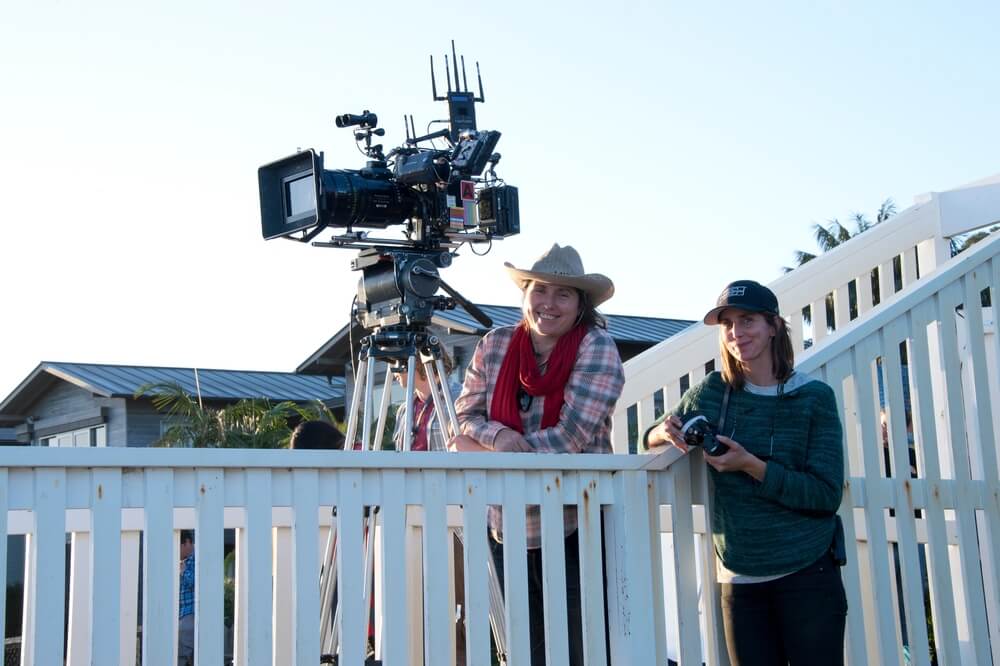 Bonnie Elliott ACS (center) with 1st AC Nillis Finne
Emily Amos: I stepped onto my first set by accident. I was working at a hardware store and looking for purpose in my life — what did I want to be when I grew up? My boyfriend at the time was a producer and asked me if I wanted to PA on a music video and make $200. I first said yes — $200 in one day! — and then asked, ‘What’s a PA?’ I’ve had a film camera at my side since I was 13 years old, I just had no concept of how movies were made. Then I saw the cameras and the lights and sets and these people that gave everything for one creative idea. Everything made sense. I had found my place and my people. I understood nothing and understood everything. The director called action and they were making music without instruments. I had never seen art made like that. I had to be a part of it. I’m still inspired by this today. You can’t make a movie by yourself. I mean, you can, but not on the scale that we all dream of.
I’m in love with the craft of losing yourself to tell a story. I can’t tell you if that’s healthy, but I’m doing my dream job. It takes everything: your full mind, full body, full creative capacity, operating all with the highest precision. You have to do all those things with other people that hopefully feel the same way. When it all clicks, it’s magic. When you see it on a big screen, you are a part of that story. It is a very human experience for me. I’m constantly chasing that feeling.
Alexandra Anonuevo: For me, the initial spark of interest to begin a career in camera assisting started in late 2022. As a recent uni graduate, I participated in a camera assisting program by Screen NSW, facilitated by Panavision Sydney. As I slowly progressed to be a camera attachment and emerging 2nd AC, I enjoyed learning and applying the intricacies of camera assisting on set. When I first started out, I was excited to try it all. Slowly, through different projects, I gave shooting, 1st AC-ing, and 2nd AC-ing a go, but felt drawn to 2nd AC-ing and every task big and small it entails. At this stage, I’m a camera truck loader on feature films and immensely enjoy this role, even the little things of bringing crafties to the team, seeing their smiles, and labeling and organizing everything!
There are three things that continue to inspire me: the versatility of the projects I get to be a part of to help create the magic, the little me that would rewind and play the behind-the-scenes on DVDs dreaming to be a part of that one day, and my mentors who inspire me greatly. Without their belief and support, I wouldn’t be where I am now.
Catherine Lutes CSC: What initially sparked my interest was an interest in photography. That got mixed into seeing films, which started to expand my mind about what films could be. A lot of stuff coming out in the ’90s blew my young mind and excited me tremendously, as did a high school stage play, where I was tasked with designing the lighting! That definitely sparked a curiosity in playing with light and of course stirred the question of, ‘What could I do when I wasn’t restricted to the stage?’ That unlocked something in me for sure.
What keeps me inspired now is always changing: a piece of art, sunlight bouncing around inside of a room, swimming underwater. When I’m in it and working, the drive to tell stories that I would want to watch, and finding more ways to honestly tell these stories, is what always excites me. I find it hard to rely on techniques and recipes that I’ve done in the past, and I like to treat every project with new eyes and new approaches, so it often feels like the first time, and that keeps me on my toes. Finding new collaborators who truly care about the work they are making and how they are creating it, having deep-dive conversations about why we are telling a story — those things inspire me. Directors and projects with intentionality and a viewpoint — those are also definitely inspiring.
Caitlin Beekman: My whole family is in the industry, and I grew up in a production-office environment. It’s the only industry I’ve ever known, and I feel completely at home being on set. I started as an office and set PA, where I learned the basics of all the departments. I did a brief internship in London, and on my return to South Africa I subsequently got a chance to be the darkroom loader on a series. This marked the real start of my career in the camera department.
My family and friends keep me inspired. They’ve supported me through thick and thin, motherhood, tough work decisions, and have always believed in me when I doubted myself. The ever-changing cameras and accessories keep me motivated. Working with different DPs and directors keeps me on my toes and inspires me to keep learning and enjoying the creative process.
Olga Abramson: I studied film history and aesthetics in college and was always interested in image making. But the real draw towards film work was the opportunity to travel to new places and meet people as a colleague rather than a tourist. Meeting people all over the world with a passion for cinema is what keeps me inspired. It’s a common language that instantly sparks enthusiasm and debate.
 Olga Abramson
Magdalena Górka ASC PSC: Since I was a kid, I’ve loved movies. They were my escape from the gray reality of Communist Poland. Going to the cinema felt like entering another dimension, and I always dreamed of stepping through the screen to be part of that world. I started photographing and developing my own pictures in our bathroom darkroom when I was 13, and I used to sneak glimpses of films forbidden for teens through a crack in the living room door while my dad watched The Promised Land or A Short Film About Killing on TV. Growing up in a country with a legacy of great cinema, where filmmaking was often a tool to fight oppression, I understood early on that telling stories through film could be powerful.
The first time I was deeply moved was watching Three Colors: Blue by Kieslowski. The visceral storytelling, the use of light as a living, breathing character, it stayed with me. Then and now, the magic of light, and Polish cinematographers like [Slawomir] Idziak and [Janusz] Kamiński, are what inspire me most. As a teenager, I was obsessed with the Frederick Forsyth and Robert Ludlum novels, and when I saw The Bourne Identity, I knew there was no other future for me, I was all in. The dream of shooting James Bond one day was born.
Jamie Felz: A love of cinema and a desire to work in a creative field guided my choice to pursue a career in the film industry. My parents encouraged and supported me as they also chose art and the humanities for their own paths. I had a chance to try several different areas of film production and found the camera to be of the most interest. Constant innovation and technical challenges have kept it fascinating even decades later.
The expression of the shared human experience through film gives us all the opportunity to connect and explore. The limitless possibilities of film give us both spectacle and intimacy, and each person perceives it all uniquely. To have the opportunity to contribute to an art form that has transformed the way the world is both recorded historically and interpreted artistically is compelling. I continue to learn and be inspired from the creative people around me.
Belen Garcia: To be honest, I’m not sure there was a single defining moment when I sat back and said, ‘I want to be a filmmaker.’ Like a lot of kids, I loved movies and cartoons, and I think that love shows in my work. But the real spark came when I picked up a camera during a photography elective in university. Since then, I’ve never really put it down. For me, everything makes more sense from behind a camera. It’s my way of staying present.
What keeps me inspired today is a harder question, especially with everything going on in the world. It’s easy to wonder what the point of making movies is when it feels like the world is burning. And then you see a great film, and you’re reminded of what movies can do, what they can mean to people, and how they can both reflect and shape our world. For me, inspiration always comes back to people and connections, not only through the stories we tell, but through the process of telling them.
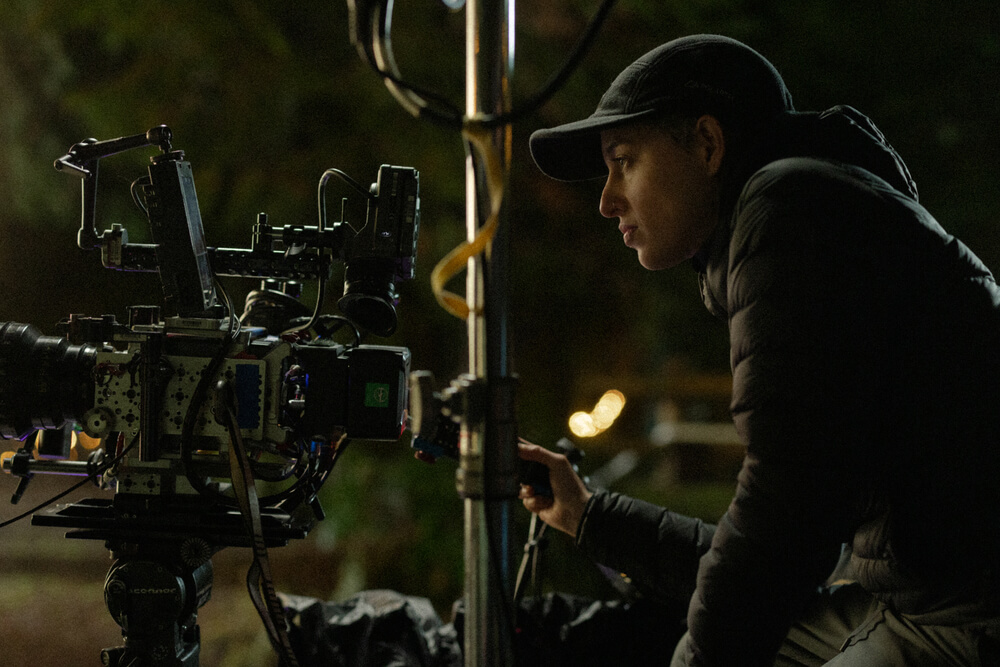 Belen Garcia
Part II – Major Moments
What are some highlights from your career that you’re particularly proud of? What made those moments so special to you?
Amos: I’ve been very lucky to have a career full of highlights. I worked for Morgan Freeman’s National Geographic show for three years and got to travel the world multiple times interviewing some of the most fascinating people on the planet. This changed who I was as a person and who I was as a camera assistant. I learned that human beings can adapt to anything, and this includes myself. I learned that humans are the same everywhere, and the world is better when it is bigger and includes everyone. As a young photographer, I had always dreamed of working for NatGeo and traveling the world. I’m proud I got to do that for that little girl with a camera.
In 2020, Keith Davis and Hoyte van Hoytema [ASC FSF NSC] asked me to join their camera team. I am honored to be working on this crew. They picked me when I was still green, but they saw my potential before I did. Keith has been an amazing teammate, mentor and friend. In many ways he got to watch me ‘grow up’ as an assistant.
We recently completed filming Christopher Nolan’s The Odyssey. This was the most challenging project of my career. The Odyssey was filmed in deserts, the casbahs of Morocco, on the open ocean, in caves, beaches, forests, castles on the top of mountains, and on the black sands of Iceland. We moved the heavy, groundbreaking camera equipment with teamwork and clever collaboration all over the world. No one broke down. No one gave up. It felt like giving myself to making art in the most complete way possible with my film family all locked in step.
I also recently working on a commercial, and Jeff Goldblum sang Frank Sinatra’s ‘Emily’ to me — a definite career highlight.
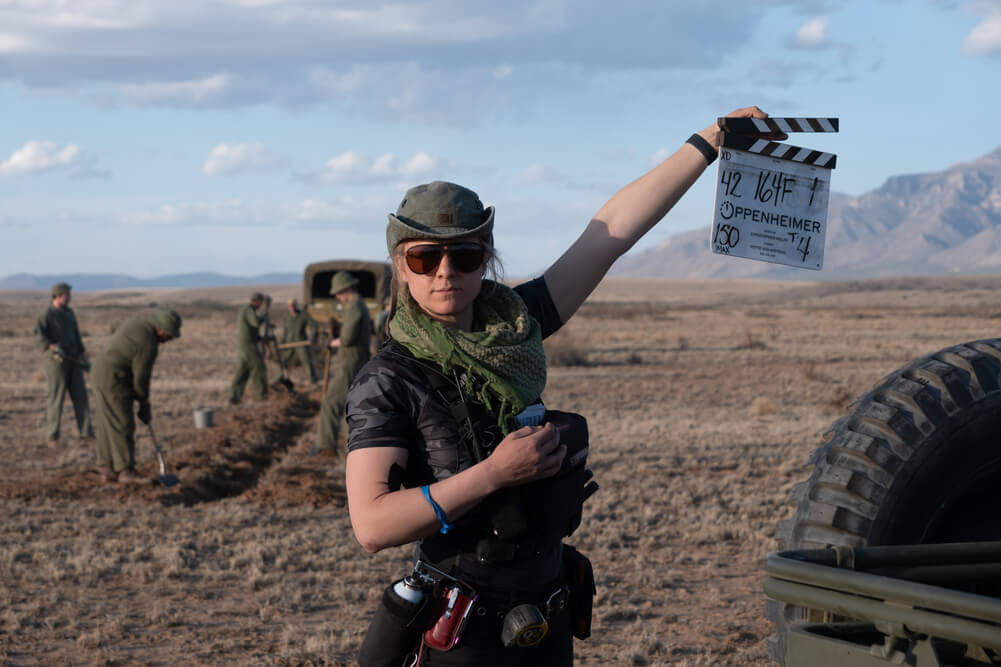 Emily Amos (photo by Melinda Sue Gordon SMPSP, courtesy of Universal Pictures)
Garcia: A few years ago, I had the opportunity to shoot a short film in Tajikistan. I had never been that far from home, or worked in a place I didn’t even know existed until I looked it up on a map. It was one of the most challenging and rewarding experiences of my life. The team came from all over the world, and we had to adapt quickly, making the most of very limited resources. We worked almost entirely with available light, sourced materials from local markets, and relied on an old four-bank Kino Flo. As hard as it was, over time I realized it had given me something really special: a deeper understanding of why I make films.
Felz: Working on movies that have become a part of cinema history has been an exceptional experience. Being given a chance to work on something memorable, be it a movie, TV, or music video, or being part of a crew bringing something amazing to life has always been a highlight. Each department collaborates in a way that is completely unique to the film industry.
I honed my technical skills on commercials and music videos and have gotten to work in beautiful and crazy locations around the world. I’ve experienced the thrill of the scenery and the sometimes insane efforts taken in order to film in some really difficult situations. Some of my favorite jobs have had me in speeding cars and motorcycles, and rigging cameras in military jets and transport planes, tanks and helicopters. There has been both aerial and underwater work. Each job requires adapting my skills to the project at hand and learning new ones. I am proud of my ability to approach each challenge with my own knowledge and using the things I learned from other crew members and the great resources of the people at rental houses. To have all of these people as tech support and friends is part of what makes working in this industry special.
Anonuevo: Some highlights? Which ones? They’re so hard to choose from! One highlight is definitely beginning my career at Panavision. I learned a great amount, not only how a piece of gear works, but understanding its functionality on set along with the urgency and quick turnarounds of assisting the camera teams prepping for their job. It’s made my experience special as I implemented what I learnt at Panavision on set. Beginning my career at Panavision was like being at uni with the opportunity to do prac [practicum] every day. It’s also become memorable as I have begun to form good working relationships with the ACs. They’ve been able to witness firsthand my progress within these last three years.
A special moment that I’m proud of is taking the leap into freelance but also ensuring my mindset was to be open to all the challenges that come with it. Additionally, what is worth mentioning are the first ‘wow!’ moments on set. From my first day on long form, to stepping onto a real life NYC set built in Sydney, and, recently, to my first time slating on a tall ladder while the camera was on a crane — so simple, but so magical!
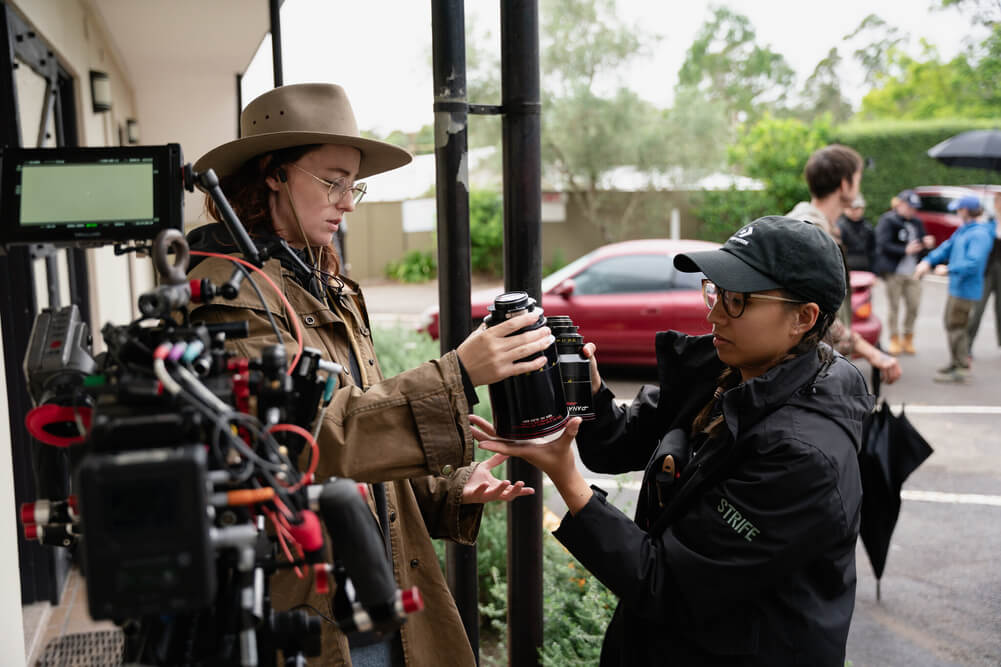 Alexandra Anonuevo (right)
Górka: One of the first moments I felt truly proud was watching Jack Strong. It was one of those rare films where everything aligned. Shot on 35mm during one of the harshest winters in Poland, I had to use every trick in my toolbox to stay creative on a modest budget in brutal conditions. I remember the day before we were supposed to film a big car chase through the city using original 1970s vehicles, half a meter of snow fell. It felt like a disaster, but it ended up being a blessing. The cars were sliding just enough to make the chase feel raw and real. People connected with the period, and for me, that was the best compliment.
Another highlight was Star Trek: Strange New Worlds, a massive production shot during the pandemic on the Volume and across 11 built sets. The logistics, lighting design, asset prep, and prelight were enormous undertakings. Like everyone at the time, I had no idea how to shoot on the Volume; I had just a few weeks to figure it out. There was no manual. Greig Fraser [ACS ASC] had just shot The Mandalorian, and he generously took time on a weekend to walk me through the basics of asset prep and key tricks.
We used so much LED ribbon to light the spaceship sets that we ran out of LED strips in all of North America. We had to wait months for another shipment just to finish the transporter room. I’m especially proud of the [Season 1] finale, ‘A Quality of Mercy,’ directed by Chris Fisher. It was based on the Season 1 episode ‘Balance of Terror’ from Star Trek: The Original Series, exploring how different leadership styles can shape the outcome of war, an incredibly relevant theme. Remaking something so iconic, with such a passionate fanbase, is always risky. That’s why it felt like such a huge achievement to pull it off, and for it to become a fan favorite was cherry on top.
Beekman: A proud moment for me was landing my first international job as a 2nd AC and subsequently traveling to many countries later on as a 1st AC. The language and systems may differ, but the love of filmmaking is universal.
Another proud moment was getting offered A-cam 1st AC on a huge Netflix series in 2021. What makes this special is I am currently prepping as a camera operator on the third season on the same show. Every day on set is different, and the variety of setups, lighting, angles, focus racks and camera moves are endless. There is never a dull moment or the luxury of not giving every shot your full attention.
Elliott: The first feature film I worked on as a clapper loader was Ivan Sen’s Beneath Clouds. The road trip in the film was also one for the crew. I loved being part of that adventure, and to feel part of making a good film. I’ll never forget Ivan thanking me at the end of the shoot for loading and unloading all the footage safely. I loved that he acknowledged that, and saw my commitment to his film, and understood how much his crew cared. I never underestimate that now that I’m a cinematographer, how much every person contributes to the whole.
My first feature as a cinematographer was filming in hijab in the height of summer in 2008 in Iran on My Tehran for Sale. It was a very low budget film, a risky endeavor, but we all believed in telling the story of artists and how they lived under the regime and continued to make art. I was the only non-Iranian on set, and because I couldn’t always understand the nuanced complexity of situations we might be filming in, the director, Granaz Moussavi, and I made a deal: I would stick up for what shots we needed to tell the story, and she would evaluate what was safe. There was a lot of trust between us all to make this film, and courage too.
I loved working with Stephen Page from Bangarra Dance Theatre on the adaptation of his stage work Spear and transposing his incredible choreography that melds traditional indigenous dance with contemporary forms into a new relationship with the camera’s eye, on location. By working between art forms, and the cross-pollination of those different aesthetic languages, we found our own song together.
Abramson: I worked my way up the ranks in NYC and eventually was lucky enough to be invited onto films like Uncut Gems and then Poor Things, The Old Oak, Bird and Bugonia as a focus puller. Not only was I working with directors, cinematographers and actors with extraordinary vision, I was welcomed into a global filmmaking community. And Panavision has been a huge part of that journey.
Lutes: I’ve been so lucky to have been able to work with great collaborators on really beautiful projects. Some of my proudest career highlights are from the most intimate films I’ve made: Firecrackers, There, There and Close to You. Making Close to You with Dominic Savage was a very special experience because it was mostly improvised, which put me into the middle of the story with the performers, and we truly were creating and experiencing this living, breathing story together as humans. A documentary called Winter Buoy I did in 2015 with director Frida Kempff also stands out as it was truly humbling to be invited into peoples’ lives and try our best to represent their stories. I was also seeing my own city in a way that I didn’t often and appreciating the work people do to truly help one another.
Moving into the TV world, Anne with an E opened many doors for me. When I think back, I wasn’t aware of just how special it was, and to work with creators who really cared about their project and those working on it was amazing. It’s something I’ve tried to find on the projects I’ve done since. Doing Black Mirror: “Joan is Awful” with director Ally Pankiw was so much fun! And recently, doing an episode of Welcome to Derry was a strange and wonderful trip, as I was able to reunite with Jamie Travis, an amazing friend and collaborator with whom I went to film school. To come back together over 15 years after making short films together for nothing and now do an HBO show was crazy.
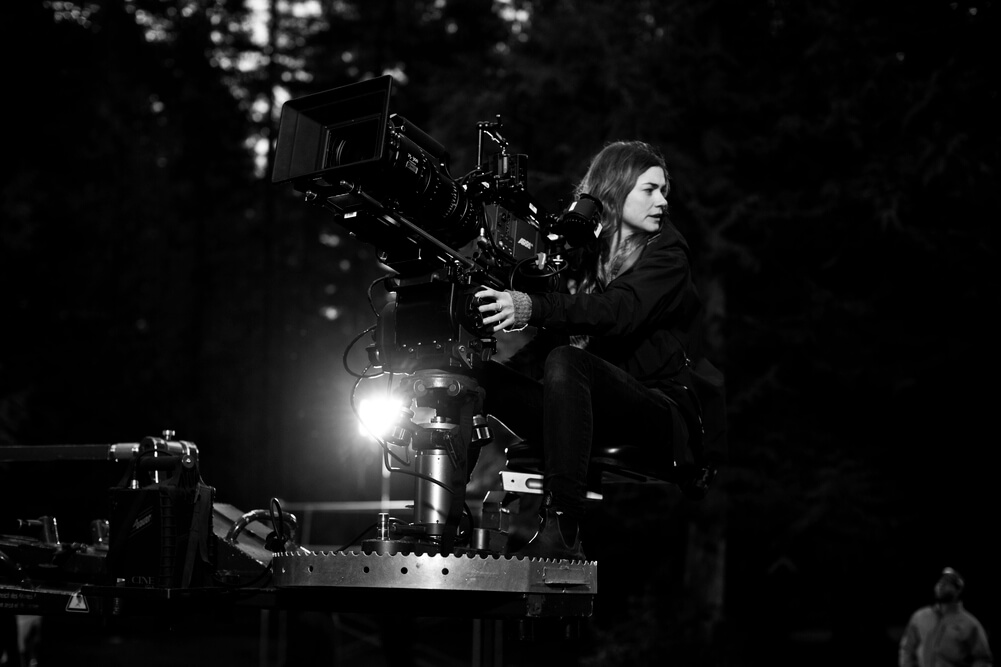 Catherine Lutes CSC
Part III – Professional Wisdom
What’s the best advice you’ve received? How has it helped you on your journey?
Garcia: For a long time, I leaned on the phrase ‘fake it till you make it.’ It was never about misrepresenting myself though. For me, it meant saying yes to opportunities that scared me, showing up fully, and giving my best every time. It helped me carry myself with confidence, something I’ve found especially necessary as a woman. It allowed me to learn from doing, making mistakes, asking better questions, and recognizing when to lean on others for support.
Felz: Both of my parents instilled a fierce work ethic that has served me well in an industry where you can’t just put something off for another day. Problems must be solved to get the shot, complete the scene, finish the day. This was their advice: Do the work, learn the job, and never stop learning. It is a lifelong attitude that was developed early and has kept me going through each day working on set, through both the easy days — if there is such a thing — and the difficult.
Other advice I follow is to be creative in approaching a problem, since the solutions are not always in a manual. If you learn new ways to do the same things, you will always have an alternative answer to an issue that may seem daunting. One must evolve with the industry technically and creatively.
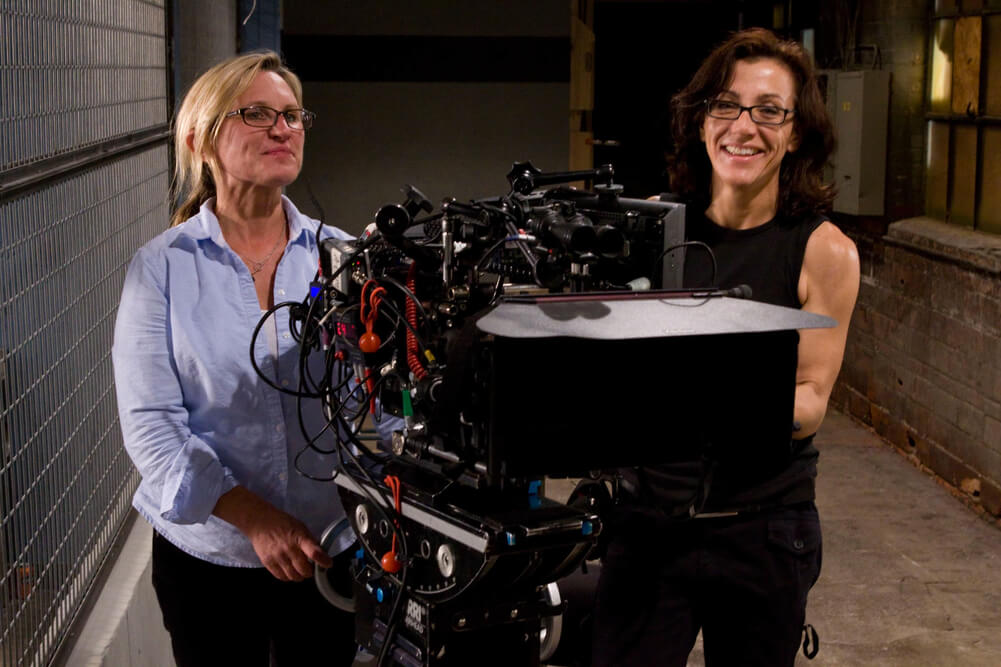 Jamie Felz (right) with Amy Vincent ASC
Lutes: The best advice I received was to exercise, stretch and protect your body. Now I definitely didn’t fully heed that advice, but I wish I had — carrying a camera around for 20 years is no joke!
Other good advice and something I had to learn is there is no one path, and you really just need to find your own way. Everyone’s journey as a cinematographer is going to look different, so following what works for you is the only way you can do it.
Anonuevo: Two simple phrases of advice — ‘I’ll be better next time’ and ‘Don’t rush the process, enjoy the journey’ — have both helped me to have the right attitude of accepting mistakes and misjudgments while overcoming challenges and turning those into personal growth.
Another piece of advice I’ve received is remembering and knowing the people and crew around you. Particularly, I always remind myself of my grassroots, the kind humans who saw the potential in me and have continued to support and provide opportunities of growth. I believe having the right people in your circle who can uplift and support you is really special and has been a key part of my own journey and growth.
I’ve thought about growth in the analogy of a jigsaw puzzle. We are all beautifully different and so are our journeys. Each piece of the puzzle fits into what makes you you. Each puzzle piece represents someone’s advice or mentorship, the successful days and even the challenging days. Sometimes the puzzle piece might not necessarily fit, it might be a different color, or it might take a gesture to rotate the piece. But once the pieces are all together it represents me, my growth, and the people I’ve met and their mentorship. It shapes me not only as an AC and but also as a person and human. I believe it’s really important to remember this and the fulfilment of genuine, creative collaboration and connections.
Amos: The best advice I’ve received comes from my mentor Chris Garcia: Pay attention, never turn your back on set, and stay out of your head. It’s simple, grounded and true no matter what situation you're in.
Beekman: When I was an inexperienced 2nd AC, the best advice I received was to just stay calm. It sounds small and silly, but it has stuck with me over the last 15 years! Even when there’s chaos and confusion, I remain calm. It means I can focus on what’s important, make logical decisions, and manage the team accordingly.
The other lesson has been to be respectful, no matter the role or hierarchy on set — we all have the same size grave at the end of the day. This has helped me forge amazing relationships and gain the respect and trust from some incredible crew.
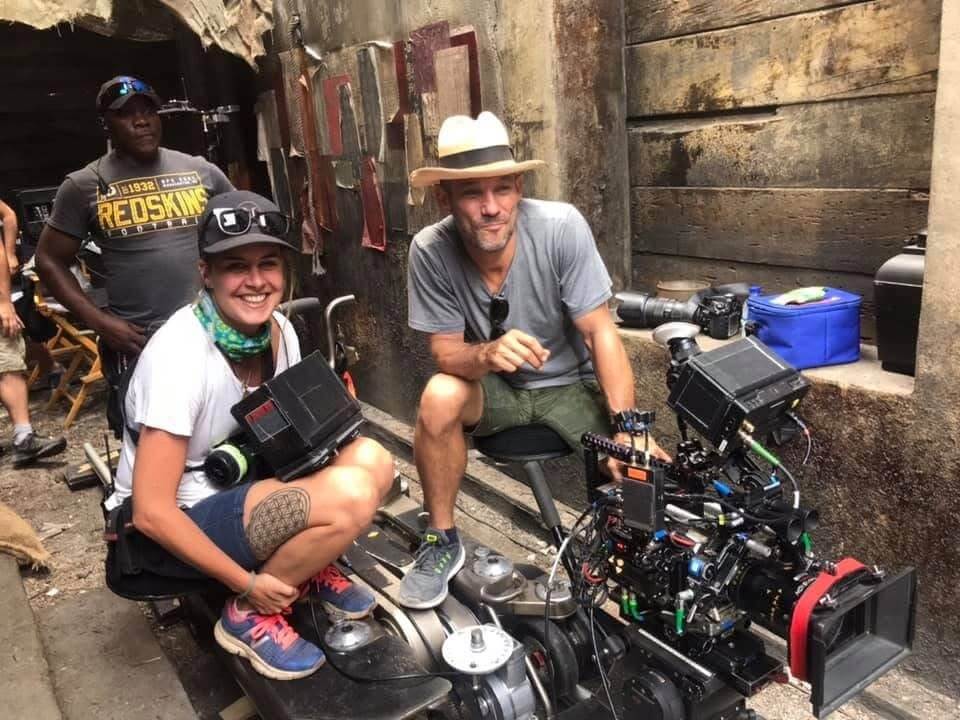 Caitlin Beekman and crew
Elliott: Early in my career in series drama, a helpful 1st AD impressed upon me the importance of knowing when to stop trimming lights with a particular actor who had a mercurial temperament. That specific scenario has translated into a fundamental principle for me. Being ready to shoot the performance and being tuned into the energy of the cast is something I consider to be of vital importance on set. The actor can feel you are there to support their performance, and to help create the character with them visually, to exchange that energy through the lens, and pass it onto the audience.
Abramson: I’ve now had the privilege of working with Panavision in New York, Los Angeles, London, New Orleans, Atlanta, Manchester, and Vancouver. Everywhere I’ve gone, I’ve met the most remarkable women — and their champions! — working as DPs, ACs, technicians, and marketing and account executives. These women have literally and metaphorically helped me climb mountains — and lent me a hair tie at the top! I couldn’t be more grateful for such an amazing support network and look forward to wherever the adventure takes me next.
Górka: The best advice I’ve ever received came from Janusz Kamiński, who once told me: ‘People like to work with people who make them feel good.’ People might forget a lot of what happens on set, even during the tough moments, but they’ll always remember how you made them feel.
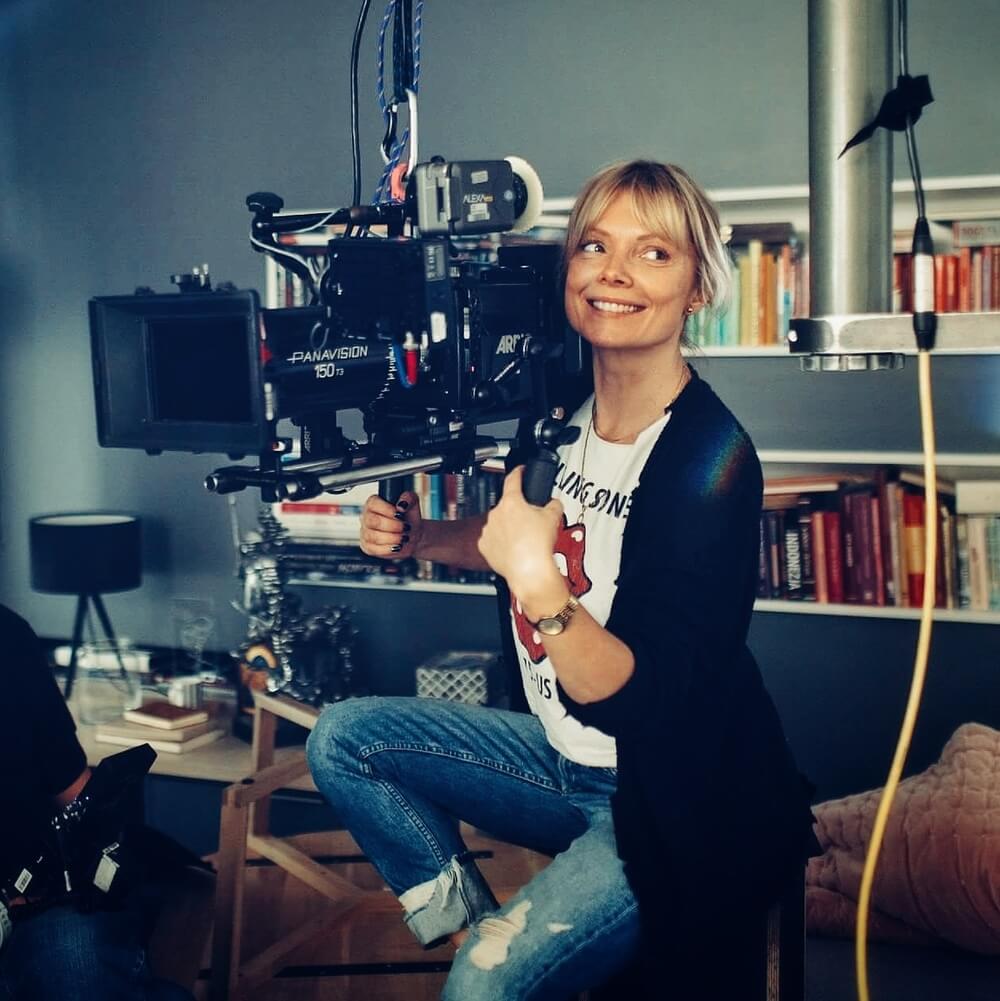 Magdalena Górka ASC PSC