Robbie Ryan BSC ISC on the VistaVision cinematography of Bugonia
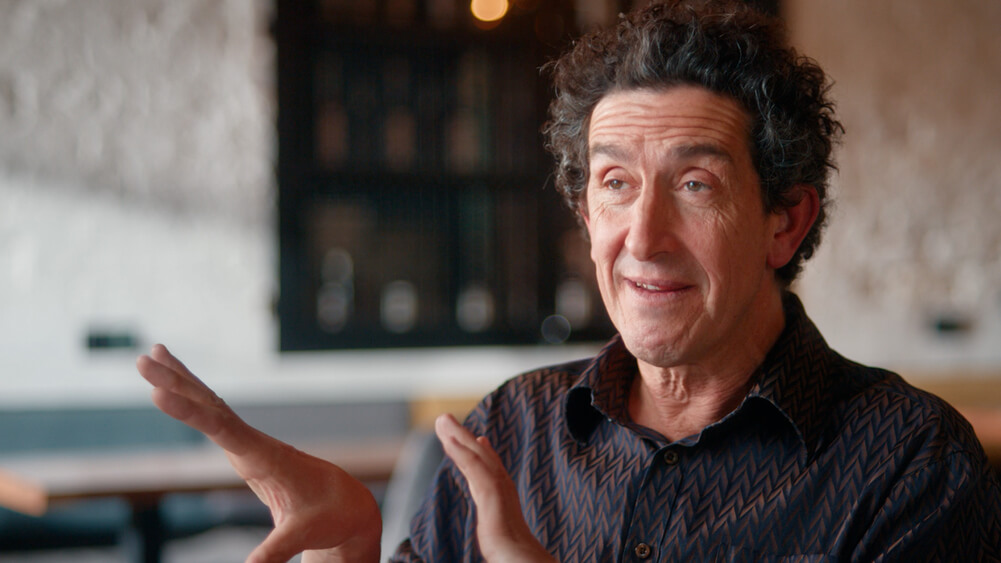
How do you describe a movie like Bugonia? As cinematographer Robbie Ryan BSC ISC puts it, “Two conspiracy theorists kidnap the CEO of a pharmaceutical company and get her to admit that she's an alien planning on destroying the Earth.” It’s a premise befitting Ryan’s continuing collaboration with director Yorgos Lanthimos, which previously included the features The Favourite, Poor Things and Kinds of Kindness. In this video, Ryan brings viewers inside that collaboration and details the artistic motivations and technical choices — including the use of the VistaVision film format — that helped define Bugonia’s visual language.
Lanthimos’ Approach
Ryan notes that Lanthimos brings an open mind and a spirit of exploration to each project and will readily say “he doesn't quite know what the film's going to be like when he's making it. He just tries to get everything in a place where he's got the capability of getting it to somewhere he was hoping it would go.”
The cinematographer goes on to explain what that approach looks like during principal photography. “He’d walk onto the set and look at the actors,” Ryan shares, “see how they're going to perform that particular scene, and then he'd get a viewfinder with the lens on it and arrange the sequence of camera setups to shoot that scene.”
Filming in VistaVision
For each of their feature collaborations, Lanthimos and Ryan have opted to shoot on 35mm film, and after experimenting with the VistaVision format for a sequence in Poor Things, they decided to embrace VistaVision as the primary format for Bugonia. Standard 35mm film is four perforations tall, but as Ryan explains, “VistaVision flops it on its side so it becomes eight perf, and you've got twice as much negative all of a sudden. So essentially, there's a bit more shallow depth because it's a bigger negative.”
The production’s primary camera was a Wilcam W11 owned by large-format film-camera technician Scott Smith and serviced by Panavision Woodland Hills. “It takes a long time to reload it,” the cinematographer continues. “It's like five minutes for a reload because of the mechanics, just the nature of it. It's good in a way because everybody's like, ‘Okay, that's going to take that time. Let's just relax, take it easy.’ Whereas sometimes, everybody wants it all to happen very quickly and have long takes. The good thing with the Wilcam is you can use 2,000-foot magazines so that you can get a 10-minute roll instead of a 1,000-foot giving you five minutes of a roll.”
The VistaVision format also forced the filmmakers to rethink one of Lanthimos’ stylistic penchants. “Yorgos usually likes to do a whip pan,” Ryan says. “That's fine if you're shooting normal 35 where the machine's pulling the film vertically, but [a VistaVision camera] is feeding the film through from the right-hand side, so if you pan into it, the camera was actually going against its own inertia, so that instantly stopped the camera. It was like, ‘Okay, no whip pans!’”
Prototype Lenses
As his primary lenses, Ryan opted to work with the same prototypes that Panavision’s Special Optics team, led by Senior Vice President of Optical Engineering and Lens Strategy Dan Sasaki, developed for director Paul Thomas Anderson and cinematographer Michael Bauman’s use on One Battle After Another. “That was a real big benefit that they were shooting just before we were, and we were able to take their lenses,” Ryan shares. “We mixed it up with the prototype lenses and other longer Primo lenses. It was like trying to find the best range of lenses that were working at a sharp level on an open aperture.
“This time, [Lanthimos] chose to shoot with a long-lens aesthetic,” the cinematographer continues. “Everything's quite portraiture and intimate. I think that's such a great, clever idea to choose a format that may be regarded as a landscape, big VistaVision kind of format, but use it with an intimacy of a basement and film it as a portrait kind of format.”
Motivated Moves
In terms of camera movement, Ryan explains, “The aesthetic is, if people are moving, the camera's moving. But with the basement, there's a heck of a lot of not anybody moving, so the camera began to be a bit more stationary and made that the language of the basement.”
Ryan adds that the film’s lighting was always driven by the environments where they were shooting. “What I like about working with Yorgos is he would always try and be true to the location as far as lighting, not to try and make it look interesting,” the cinematographer says. “James Price, the [production] designer, he lit the film really because all of the practicals in the house were put in by James. Obviously, he talked with Yorgos and myself about what kind of lights, where did we want them? We knew it was all in the basement, so we'll do a fluorescent — most of these places would have that. And Yorgos was really keen on a very bright LED, harsh work light, so there's a scene when the guys [kidnappers Teddy and Don, played by Jesse Plemons and Aidan Delbis, respectively] are inspecting [Michelle, the CEO, played by Emma Stone], when she's in the basement for the first time. They have a bright LED light that lights her up, and [Teddy’s] going, ‘Oh, you can tell it straight away. She's got all the signs. She's an alien.’ You're like, ‘Is she? I don't know.’
Always Pushing
“I get the film-school treatment every day with a Yorgos film,” Ryan enthuses. “His photography is so good, and he translates that to motion picture as well. He's always trying to challenge himself, trying to push things and get a visual language for each film. With Bugonia, we tried something we hadn't done before as well, so it's very exciting to work with him.”